Tyre repair
Not all tyre damage is a simple puncture. Kerb scuffs, impact bulges, bead leaks and valve failures all present as "my tyre keeps going flat". We take the tyre off the rim, inspect it properly, and tell you which of those it actually is.
Do you need this?
Bring the car in if a tyre is losing pressure and you cannot see why, if you have hit a kerb or a pothole hard, or if a tyre looks visibly different from the others.
Signs to look for
- Slow pressure loss with no visible puncture — often a bead or valve leak
- A bulge or blister in the sidewall after an impact
- Damage to the tyre bead after a badly done fitting elsewhere
- Corrosion on the rim causing the tyre to leak where it seats
- A valve that hisses when you press it sideways
What we actually do
Step by step, so you know what you are paying for.
We inflate and submerge or spray the tyre to find where the air is actually escaping.
The tyre comes off the rim for internal inspection.
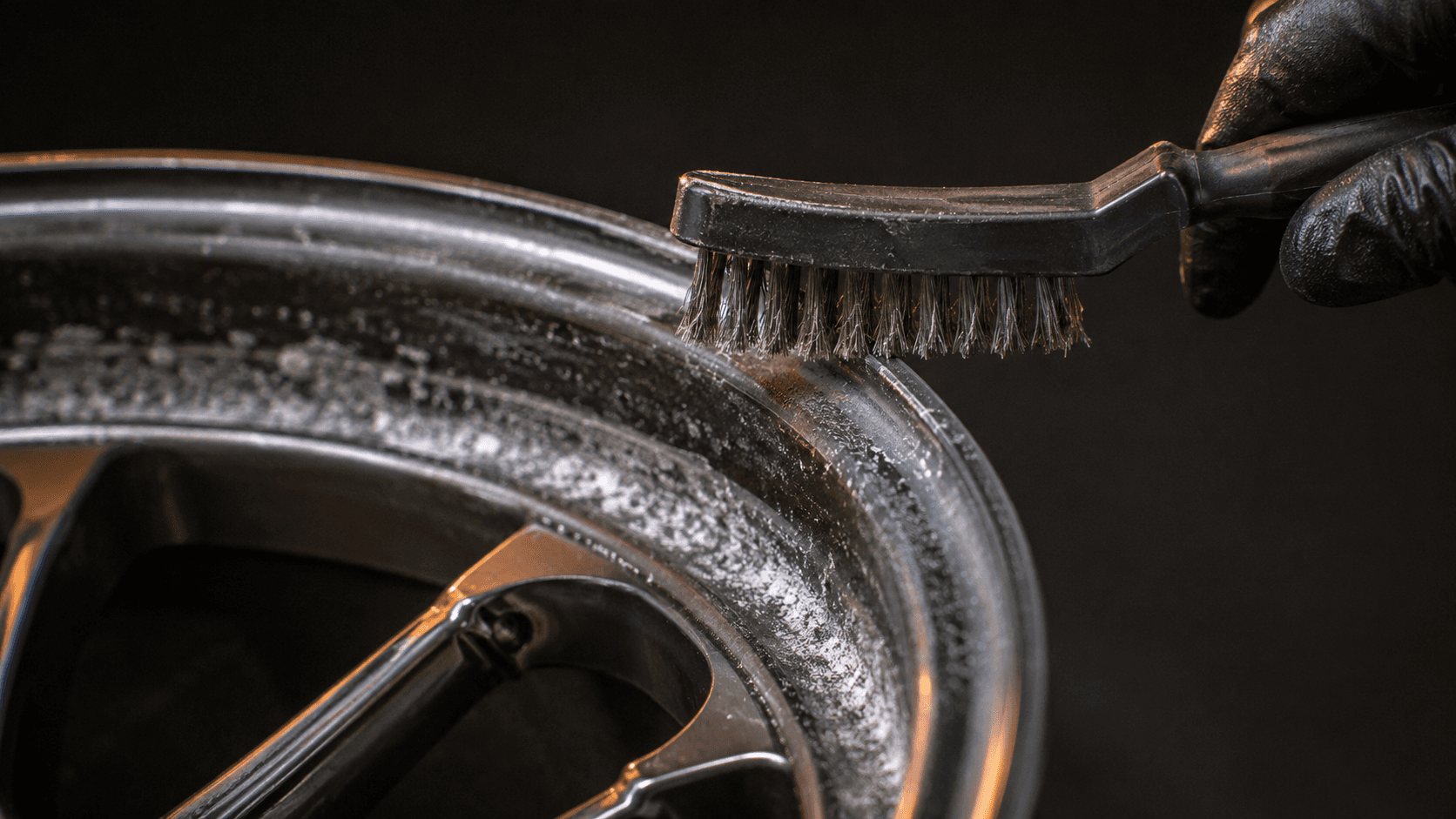
We check the bead seat and the rim itself for corrosion or damage, which is a common cause on older alloys.
We repair what is safely repairable, or clean and reseal a leaking bead.
Valve is replaced if it is the cause.
Refit, balance and pressure check.
Included in the price
- Leak diagnosis
- Removal and internal inspection
- Bead clean and reseal where applicable
- Rebalancing
- 5% VAT
Nothing is added at the counter. If we find something unexpected, we tell you the cost and wait for you to agree before doing it.
Questions we get asked
Why does my tyre lose pressure with no puncture?
The most common causes are a leaking valve, a corroded rim where the tyre bead seats, or a hairline crack in the alloy after a pothole impact. A leaking valve or a corroded bead seat is usually fixable. A cracked alloy may or may not be, depending on where the crack is, and a crack through a spoke or the mounting face means the wheel should be replaced.
Is a bulge in the sidewall repairable?
No. A bulge means the internal casing cords have snapped, usually from a kerb or pothole impact, and the only thing containing the air at that point is the outer rubber. It can burst without warning at speed. The tyre must be replaced immediately — do not drive on it.
How much air should a tyre lose naturally?
About 1 to 2 PSI per month is normal through the rubber itself, plus more in hot weather. If you are adding air every week or two, something is wrong and it is worth having the tyre looked at rather than continuing to top it up.